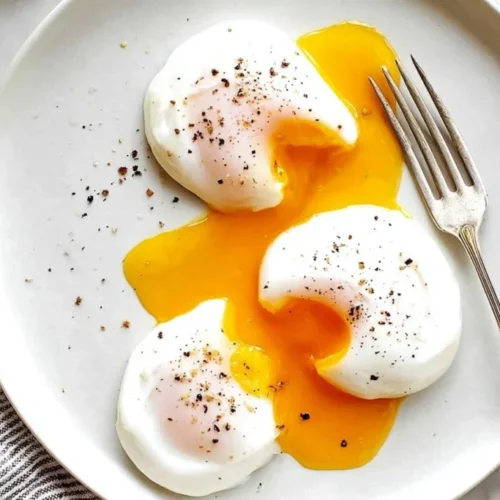
This poached eggs recipe is simple, silky, and ready in minutes. With just water, eggs, and a splash of vinegar, you get tender whites and a soft, golden yolk. It’s perfect for toast, avocado, grain bowls, or a quick salad topper. No special gear needed—just a pot, a spoon, and a small bowl. Once you learn a few small tricks, you’ll make them like a pro every time.

Why Make Poached Eggs Recipe
Poached eggs are quick to make and taste fresh and light. They bring a gentle, creamy bite to any plate without extra oil or butter. The whites cook soft and tender while the yolk stays runny, so every forkful feels rich. You only need a few pantry items and a pot of simmering water, which means less cleanup and less stress.
They fit every season and mood. In cooler months, slide one over warm toast, sautéd greens, or a cozy bowl of oatmeal or grits. In spring and summer, add one to crisp salads, sliced tomatoes, or grilled asparagus for easy protein. Poached eggs also help you rescue leftovers—rice, roasted veggies, even soups feel special with a soft yolk on top. They’re budget-friendly, fast, and endlessly flexible, from simple breakfasts to elegant brunch plates.
Why You’ll Love This Poached Eggs Recipe
Cozy Flavor with Everyday Ingredients
- Uses eggs, water, and a touch of vinegar you likely already have
- Soft whites and creamy yolks add richness without heavy sauces
- Works on toast, bowls, greens, and more
Quick to Make, Easy to Love
- Ready in about 10 minutes, start to finish
- Minimal tools, minimal mess
- Scales for one or many with simple timing
Ingredients and Substitutions
What You’ll Need for This Recipe
- Fresh large eggs (as fresh as possible)
- Water (enough to fill a medium pot 2–3 inches deep)
- Distilled white vinegar, 1–2 teaspoons per quart/liter of water (optional but helpful)
- Pinch of salt (for serving)
- Black pepper (for serving)
- Toast, avocado, sautéed greens, or salad (optional for serving)
Smart Swaps for Dietary Needs
- Vinegar-free: Skip vinegar and strain the egg white through a fine-mesh sieve to remove the loose outer whites.
- Gluten-free: Serve on gluten-free toast, potatoes, or a grain bowl.
- Dairy-free: This recipe is naturally dairy-free.
- Low-sodium: Season lightly or use no added salt.
Smart Variation (Optional)
- Herbed finish: Sprinkle chopped chives, parsley, or dill.
- Spiced butter: Melt a little butter or olive oil with paprika or chili flakes and drizzle on top.
- Lemon zest: A tiny grate of zest brightens the plate.
How to Make Poached Eggs
Step-by-Step Cooking Instructions
Step 1: Fill a medium pot with 2–3 inches of water. Bring it to a gentle simmer over medium heat; small bubbles should rise, not a rolling boil.
Step 2: Add 1–2 teaspoons vinegar per quart/liter of water (optional). This helps the egg whites set neatly.
Step 3: Crack an egg into a small bowl or ramekin. This makes sliding it into the water easy.
Step 4: Stir the water in one direction to make a gentle whirl (optional). This helps wrap the white around the yolk.
Step 5: Lower the bowl to the surface and slip the egg into the center of the pot. Repeat with a second egg only if your pot has room.
Step 6: Poach at a gentle simmer (about 180–190°F / 82–88°C) for 3–4 minutes for runny yolks, or 5 minutes for more set yolks. Keep the water just simmering, not boiling.
Step 7: Lift the egg with a slotted spoon. Blot on a paper towel to remove excess water. Trim wispy edges if you like. Season with salt and pepper and serve right away over toast, bowls, or greens.
Tips for Texture, Timing & Tools
- Use fresh eggs: Fresher eggs have tighter whites and hold shape better.
- Fine-mesh strainer trick: Crack the egg into a strainer to drain thin whites; transfer to a bowl, then poach for a tidy look.
- Keep it gentle: Maintain a low simmer. Boiling water breaks the egg apart.
- Batch ahead: Poach eggs 1–2 minutes less, shock in ice water, store in cold water in the fridge, then reheat to finish.
- Don’t skip drying: A quick blot prevents soggy toast and watered-down plates.
Storage & Reheating
How to Store It Right
- Short-term: Place cooked eggs in a container of cold water. Cover and refrigerate up to 2 days.
- Keep them submerged so they don’t dry out or absorb fridge odors.
Reheating Without Losing Flavor
- Heat a pot of water to just below a simmer.
- Slide the chilled eggs in and warm for 45–60 seconds, until heated through.
- Pat dry, season, and serve.
A Dish Worth Making Again and Again
Simple steps, clean flavor, and fast prep make poached eggs a reliable go-to for busy mornings and easy meals.
(FAQs)
Why add vinegar to the water?
A small splash helps the egg whites set faster and tighter, giving you a neater shape. If you dislike vinegar, skip it and strain the egg first.
How long should I poach for runny vs. firm yolks?
About 3–4 minutes gives a runny yolk; 5 minutes gives a more jammy center. Adjust by 15–30 seconds for very large or very cold eggs.
How do I stop the whites from spreading?
Use fresh eggs, keep the water at a low simmer, and pour the egg in gently from a small bowl. Straining off thin whites also helps.
Can I make poached eggs ahead for a crowd?
Yes. Poach slightly under, chill in ice water, and store in cold water in the fridge for up to 2 days. Reheat in hot (not boiling) water for 45–60 seconds.
Final Thoughts
With a calm simmer and a couple of easy tricks, this poached eggs recipe delivers silky whites and a rich, runny yolk every time. Keep it simple, or dress it up—either way, you’ll have a fast, satisfying meal in minutes.
Poached Eggs
Ingredients
Main Ingredients
- 2 large eggs Fresh large eggs As fresh as possible
- 3 inches Water Enough to fill a medium pot 2–3 inches deep
- 1-2 teaspoons Distilled white vinegar Per quart/liter of water; optional but helpful
- 1 pinch Salt For serving
- 1 pinch Black pepper For serving
Optional Serving Suggestions
- Toast
- Avocado
- Sautéed greens
- Salad
Instructions
Preparation
- Fill a medium pot with 2–3 inches of water. Bring it to a gentle simmer over medium heat; small bubbles should rise, not a rolling boil.
- Add 1–2 teaspoons vinegar per quart/liter of water (optional). This helps the egg whites set neatly.
- Crack an egg into a small bowl or ramekin. This makes sliding it into the water easy.
- Stir the water in one direction to make a gentle whirl (optional). This helps wrap the white around the yolk.
- Lower the bowl to the surface and slip the egg into the center of the pot. Repeat with a second egg only if your pot has room.
Cooking
- Poach at a gentle simmer for 3–4 minutes for runny yolks, or 5 minutes for more set yolks. Keep the water just simmering, not boiling.
- Lift the egg with a slotted spoon. Blot on a paper towel to remove excess water. Trim wispy edges if you like. Season with salt and pepper and serve right away.
Notes









Leave a Reply