Gut-Healing Vegetable Broth warms the belly and soothes digestion with simple, whole ingredients. This gentle broth works as a base for soups, a sipping tonic on its own, or a cooking liquid that brings flavor without heaviness. Try it as a base for quick soups when you want comfort without fuss.
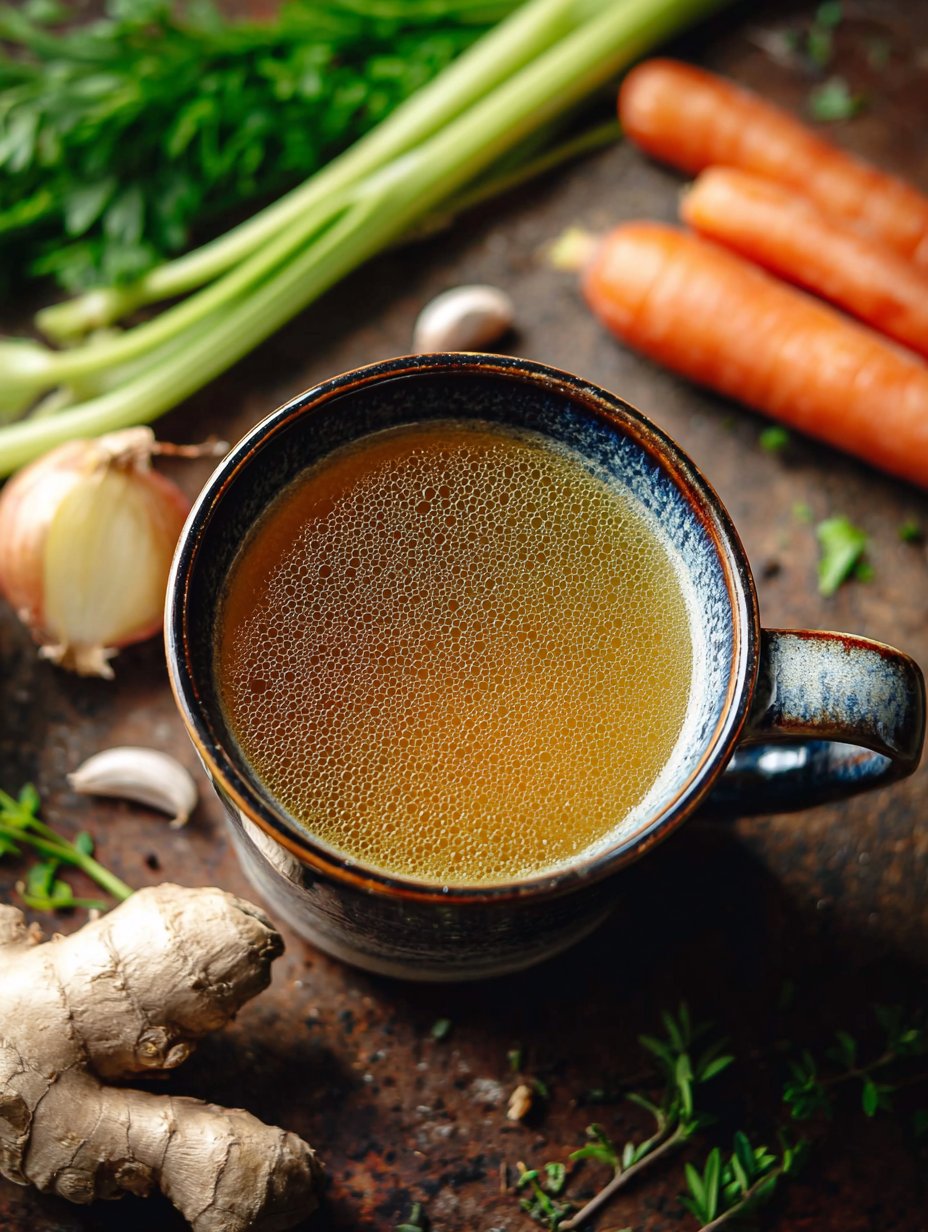
Comfort and health in a simple pot
I love this recipe because it feels seasonal and approachable. It asks for vegetables you likely have on hand and makes a clear, nourishing broth in under an hour. Use it when you need something calming after a long day, or as a restorative cup during mild stomach trouble. If you want a heartier bowl later, this broth pairs beautifully with a simple vegetable stew or light proteins like in many home-cooked recipes such as classic cabbage soup.
What makes this broth so lovable
Cozy flavors from everyday produce
The taste comes from roasted roots, onion, garlic, herbs, and umami-rich mushrooms. Those pantry staples build depth without heavy fats. The warmth and mild aromatics feel comforting and familiar.
Fast to cook, easy to keep
You can roast or simmer the vegetables. Both methods extract nutrients and flavor quickly. Make a big batch and refrigerate or freeze portions for busy days.
Ingredients and smart swaps
Gather fresh, sturdy vegetables and aromatics. The goal is flavor and gentle nourishment rather than bright, raw notes. This list gives you what to prepare and why each part matters.
Ingredients you’ll gather
- 2 tablespoons olive oil
- 2 large onions, roughly chopped
- 3 carrots, chopped
- 3 celery stalks, chopped
- 1 leek, white and light green parts only, sliced
- 4 cloves garlic, smashed
- 6–8 ounces mushrooms (cremini or shiitake for more umami)
- 1 small parsnip or potato (optional for body)
- 1–2 bay leaves
- 6–8 sprigs parsley and 2 sprigs thyme (or 1 tsp dried each)
- 1 teaspoon whole black peppercorns
- 10 cups water (or vegetable stock for extra depth)
- Sea salt to taste
Substitutions for dietary needs
- No oil: Roast or dry-sauté vegetables, or skip oil and simmer gently.
- Low-FODMAP: Use green parts of leeks, skip onions and garlic, and add asafoetida (hing) in tiny amounts if tolerated.
- Extra protein: Add cooked lentils or soft tofu when serving, not in the broth pot.
Smart variation (optional)
For a richer sip, roast vegetables until caramelized before simmering. For a lighter broth, simmer without roasting and strain sooner.
Step-by-step: Making the broth
Step-by-step cooking instructions
- Heat olive oil in a large pot over medium heat. Add onions, carrots, celery, leek, and mushrooms. Cook 8–10 minutes until beginning to soften.
- Add garlic and parsnip or potato; cook 1–2 minutes.
- Pour in water, add bay leaves, herbs, and peppercorns. Bring to a boil, then reduce to a gentle simmer.
- Simmer uncovered 30–40 minutes. Taste and add salt.
- Strain through a fine-mesh sieve. Press solids gently to extract liquid. Discard solids or save for compost.
- Cool and store or use immediately.
| Step | Details |
|---|---|
| 1 | Sauté or roast vegetables to build flavor. |
| 2 | Add water and herbs, then simmer gently 30–40 minutes. |
| 3 | Strain, cool, and season before serving or storing. |
Tips for texture, timing & tools
- Use a heavy-bottomed pot for even heat.
- Don’t over-salt early; reduce will concentrate flavors.
- For clearer broth, skim foam during the first 10 minutes.
- Leftover broth pairs well with simple recipes like a quick hearty vegetable stew.
Storing and reheating without losing goodness
How to store Gut-Healing Vegetable Broth right
Cool broth quickly and transfer to airtight containers. Refrigerate up to 4–5 days. Freeze in portions for up to 3 months. Ice cube trays work well for small amounts.
Reheating without losing flavor
Gently warm on the stove; avoid rapid boiling. If you refrigerated and fat solidified on top, skim or whisk while reheating for a smooth cup.
A dish worth making again and again
This broth rewards small changes. Swap herbs, add roasted garlic for depth, or keep it plain to sip when your gut craves calm. It makes meal prep easier and supports gentle digestion.
PrintGut-Healing Vegetable Broth

A soothing vegetable broth that warms the belly, ideal as a base for soups or as a comforting tonic on its own.
- Prep Time: 15 minutes
- Cook Time: 40 minutes
- Total Time: 55 minutes
- Yield: 8 servings 1x
- Category: Soup
- Method: Simmering
- Cuisine: Vegetarian
- Diet: Vegan
Ingredients
- 2 tablespoons olive oil
- 2 large onions, roughly chopped
- 3 carrots, chopped
- 3 celery stalks, chopped
- 1 leek, white and light green parts only, sliced
- 4 cloves garlic, smashed
- 6–8 ounces mushrooms (cremini or shiitake)
- 1 small parsnip or potato (optional for body)
- 1–2 bay leaves
- 6–8 sprigs parsley and 2 sprigs thyme (or 1 tsp dried each)
- 1 teaspoon whole black peppercorns
- 10 cups water (or vegetable stock for extra depth)
- Sea salt to taste
Instructions
- Heat olive oil in a large pot over medium heat. Add onions, carrots, celery, leek, and mushrooms. Cook for 8–10 minutes until beginning to soften.
- Add garlic and parsnip or potato; cook for 1–2 minutes.
- Pour in water, add bay leaves, herbs, and peppercorns. Bring to a boil, then reduce to a gentle simmer.
- Simmer uncovered for 30–40 minutes. Taste and add salt.
- Strain through a fine-mesh sieve. Press solids gently to extract liquid. Discard solids or save for compost.
- Cool and store or use immediately.
Notes
For a richer sip, roast vegetables until caramelized before simmering. For a lighter broth, simmer without roasting and strain sooner.
Nutrition
- Serving Size: 1 cup
- Calories: 75
- Sugar: 2g
- Sodium: 200mg
- Fat: 4g
- Saturated Fat: 0.5g
- Unsaturated Fat: 3.5g
- Trans Fat: 0g
- Carbohydrates: 10g
- Fiber: 2g
- Protein: 2g
- Cholesterol: 0mg
Common questions people ask
Is vegetable broth actually good for gut health?
Yes. A clear, low-acid vegetable broth provides fluids, electrolytes, and gentle nutrients. It can soothe the stomach and support hydration.
Can I use frozen vegetables?
Absolutely. Frozen vegetables work well and often save time. Roast or simmer them the same way.
How long should I simmer for maximum nutrients?
A simmer of 30–45 minutes extracts flavor and soluble nutrients. Longer cooking can deepen flavor but doesn’t necessarily add more gentle compounds for digestion.
Can I make this ahead and freeze it in portions?
Yes. Freeze in jars, silicone molds, or freezer bags. Thaw overnight in the fridge or gently on the stove.
Conclusion
If you want a soothing kitchen staple, this Gut-Healing Vegetable Broth is an easy, flexible choice. For more background on how a well-made vegetable broth supports digestion and why some cooks prefer it over bone-based broths, read this article: Vegan Pumpkin Cookies.










Leave a Reply